A movie disappearing from Netflix, Prime Video, or another streaming service is not necessarily a technical error, but it is also not proof that the film has changed distributors. Titles can leave because a platform’s license expires, regional rights are unavailable, renewal costs are considered too high, or another company controls the relevant rights. Netflix confirms that licensed titles may be available only in certain countries or for a limited period. When a license approaches expiration, Netflix considers whether the rights remain available, the title’s regional popularity, and the cost of renewing it. A distributor change can affect availability when the outgoing or incoming distributor controls the film’s streaming rights in the viewer’s territory. The result depends on the contracts already in force, the rights transferred, the countries covered, and the types of distribution included in the new agreement.
Immediate Impact: How a Distributor Switch Affects Digital Streaming Rights
When a movie moves from Distributor A to Distributor B, the effect on streaming is determined by the scope of the transfer rather than the distributor’s name alone.
Existing SVOD licenses do not automatically terminate whenever a producer appoints a new distributor. A current platform agreement may continue until its expiration date, be transferred with the required consent, or end early only when the contract contains an applicable termination provision.
The new distributor may receive rights only after the previous agreement expires. It may also acquire some territories or media rights while older licenses remain active elsewhere. WIPO explains that film distribution agreements can license or assign rights by territory, language, medium, and period. There is no single standard distribution arrangement. A streaming platform must remove a title when it no longer has permission to offer it. The platform is not necessarily required to remove the title on the date the distributor changes if its own license remains valid.
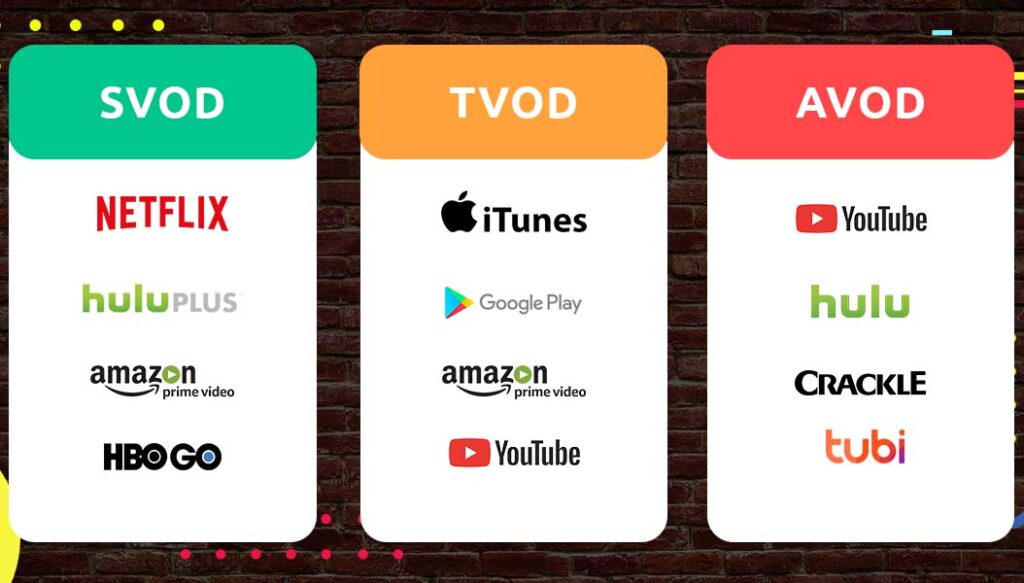
A new distributor may pursue different streaming partners, release dates, prices, or territorial strategies. It might negotiate an SVOD agreement, keep the film available for digital rental, license it to an advertising-supported service, or divide the rights among several companies. The existence of a preferred relationship with one platform does not prove that every acquired film will migrate there. Rights already granted to another service may prevent immediate movement, and a distributor may control theatrical rights without controlling streaming rights.
A temporary period with no subscription-streaming availability is possible, but there is no standard duration. A gap may occur because an old license has expired while a replacement agreement has not been completed. Contract negotiations, rights verification, delivery requirements, localization, platform scheduling, and approval of technical materials can all affect timing. Netflix notes that an expected release date can change while licensing contracts or production materials are being finalized. A missing title therefore does not prove that a legal handover or file re-encoding is taking place. The distributor or streaming service would need to confirm the reason.
How a Change in Distributor Reshapes the “Theatrical Window” Before Going Online
The theatrical window is the period during which a movie is shown in cinemas before becoming available through later forms of distribution. Traditional release sequences may move from cinemas to transactional video, subscription streaming, pay television, free television, or advertising-supported services. These windows are established through contracts, industry practices, exhibitor arrangements, and local market conditions. WIPO describes theatrical, TVOD, SVOD, television, and AVOD as separate exploitation windows while emphasizing that distribution agreements are not standardized.
A large studio may give a movie an exclusive theatrical period, but there is no universal 45-to-90-day rule. The length can vary by title, country, box-office performance, cinema agreement, and the studio’s release plan.
Some distributors use shorter theatrical runs, limited cinema releases, premium rentals, direct-to-streaming releases, or simultaneous cinema and digital availability. These approaches cannot be reduced to a universal 17-to-30-day window.
A new distributor can change future release plans only to the extent that it controls the necessary rights. It may make a film available online sooner, preserve a longer cinema run, or license different services in different countries.
It cannot simply disregard an existing exclusive theatrical or streaming agreement. Viewers should rely on local release announcements rather than assuming that a change in distributor automatically moves the digital date forward or backward.
The Battle Between “Fixed License Fee” and “Revenue Share”
Streaming and digital-distribution agreements can use flat license payments, minimum guarantees, revenue shares, performance-based payments, or combinations of these methods. The payment structure does not by itself determine whether a movie appears on SVOD or TVOD.
| Criteria | Fixed License Fee | Revenue Share |
|---|---|---|
| Core Nature | A platform pays an agreed amount for specified rights, territories, media, and a defined term. | The rights holder receives an agreed portion of transaction revenue, advertising revenue, or another contractually defined revenue stream. |
| Distributor Objective | Provides predictable payment, although the distributor may still bear costs and give up other licensing opportunities. | Allows earnings to vary with actual commercial performance but does not guarantee greater total revenue. |
| Impact on Accessibility | May be used for SVOD, television, AVOD, exclusive licensing, or other arrangements. | Common in transactional and advertising-supported models, but it can also appear as part of other distribution agreements. |
The original claim that a fixed fee always places a movie inside a standard subscription is incorrect. An SVOD license can involve a flat fee, a minimum guarantee, bonuses, or another negotiated structure.
Revenue sharing also does not necessarily mean the title will be withdrawn from subscription streaming. A distributor can grant separate rights to different services, provided those agreements do not conflict.
A movie can also be available through subscription and rental at the same time, depending on the territory and the rights involved. Prime Video presents content included with Prime as well as titles offered through rentals, purchases, and additional subscriptions. Apple separates the Apple TV+ subscription service from the Apple TV Store, where eligible movies can be rented or purchased.
Hybrid/Dual-Track Distribution Strategy: When the New Distributor Chooses “Both Theatres and Streaming”
A distributor may use cinemas and digital services within the same release plan, but “hybrid distribution” can describe several different arrangements.
A movie may become available in cinemas and through premium digital rental on the same date. It may instead receive a limited theatrical release before digital availability or open on different dates in different countries. Day-and-date distribution is an option, not a required result of changing distributors.
Rights can be divided by territory and type of use. One company may handle domestic cinemas, another may control international sales, and separate platforms may license SVOD rights for individual regions. WIPO notes that a producer or rights holder may use one integrated distributor or several distributors working in different territories and market segments.
Multiple distribution routes can give viewers more choices, but access may still differ by country. A film can be included with a subscription in one market, available only as a rental in another, and unavailable in a third. Netflix confirms that other companies may control a title’s rights in a particular region, preventing it from being offered there.
The Appeal of Local Content and Global Online Distribution Rights
A successful local film may attract international distributors, sales agents, broadcasters, or streaming platforms. A new agreement can expand its audience, but international expansion is not automatic. When a global distributor acquires rights from a regional producer or distributor:
The distributor may license the film to additional countries and arrange subtitles, dubbing, marketing, delivery, or platform placement. The number of territories and languages depends on the contract, commercial demand, available materials, and each platform’s release decision. A worldwide or multi-territory agreement does not guarantee an immediate simultaneous release across hundreds of countries. Film rights are commonly licensed according to a specific territory, language, medium, and period.
A local platform does not necessarily lose the movie as soon as global rights are sold. Its existing license may continue until expiration, or the local market may be excluded from the global agreement. Removal becomes necessary only when the local service’s rights expire, are validly terminated, or conflict with a newly granted exclusive right. A change in distributor alone is not enough to establish that a local blackout will occur.
Why Changing Distributors Makes Your Movie “Vanish” From Netflix/Amazon Recommendation Algorithms
A distributor change does not necessarily create a new content record, erase viewing history, or reset recommendation data. Streaming services do not publicly document their internal asset-management rules in enough detail to support that conclusion.
A returning film may use updated artwork, subtitles, audio tracks, ratings, rights dates, or descriptive metadata. A platform may modify an existing listing or create another technical asset, but viewers cannot determine this merely from the distributor credit.
There is no official evidence that a licensing change automatically deletes all view counts, completion data, ratings, or personalized-interest signals. Netflix says titles that leave the service stop appearing in My List, but they can reappear if they become available again in the member’s region. This directly contradicts the claim that every returning title must begin with a completely empty user relationship.
Netflix explains that its recommendations consider factors such as a member’s interactions, other members with similar preferences, and information about the title. It does not list distributor changes or a newly issued asset ID as an automatic reason for losing recommendation priority. A film may appear in different homepage positions after returning because the available catalog, regional demand, release timing, profile activity, and competing titles have changed. That is different from proving that its previous engagement data was erased.
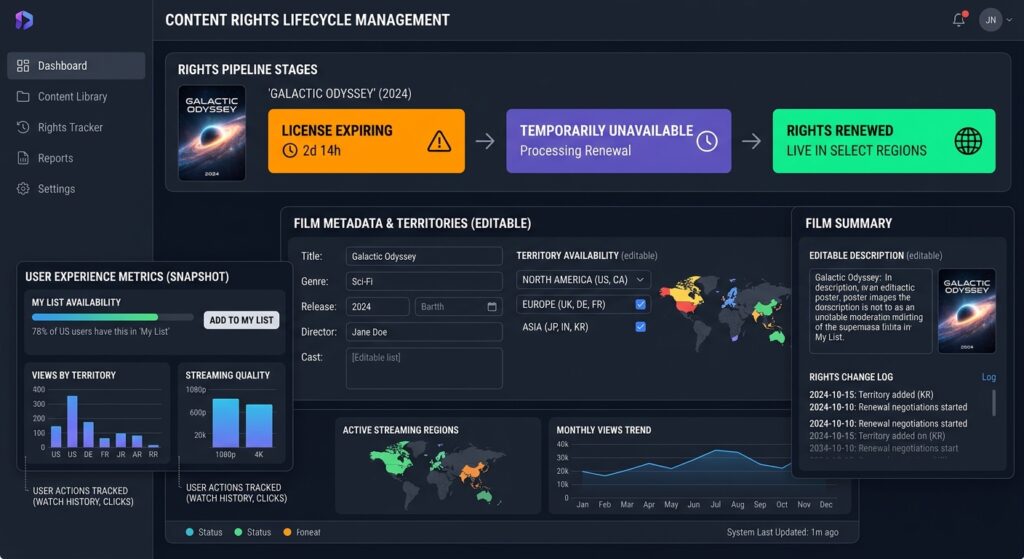
A change in a movie’s distributor can affect when, where, and under which payment model the film is available. It does not automatically terminate current licenses, establish a fixed theatrical window, move the title from SVOD to rental, or reset platform algorithms. Viewers should check the service’s leaving-soon notice, the film’s official distributor or producer page, and local rental and subscription listings. The most reliable explanation comes from confirmed licensing and release information, not from assumptions based on a title disappearing from search.