Taking a screenshot of a memorable webtoon panel may seem harmless. Problems begin when the image is uploaded publicly, separated from its source, used to recreate a paid episode, or shared in a way that replaces the official release.
Some reading apps block screen capture or produce a blank image. Others permit ordinary screenshots but restrict copying and redistribution through their terms of use. The technical ability to capture an image does not determine whether publishing it is legally permitted.
Copyright rules also vary by country. In the United States, limited use for criticism, commentary, news reporting, teaching, scholarship, or research may qualify as fair use, but there is no automatic rule allowing a fixed number of panels. The purpose, amount used, nature of the work, and effect on the market must all be considered.
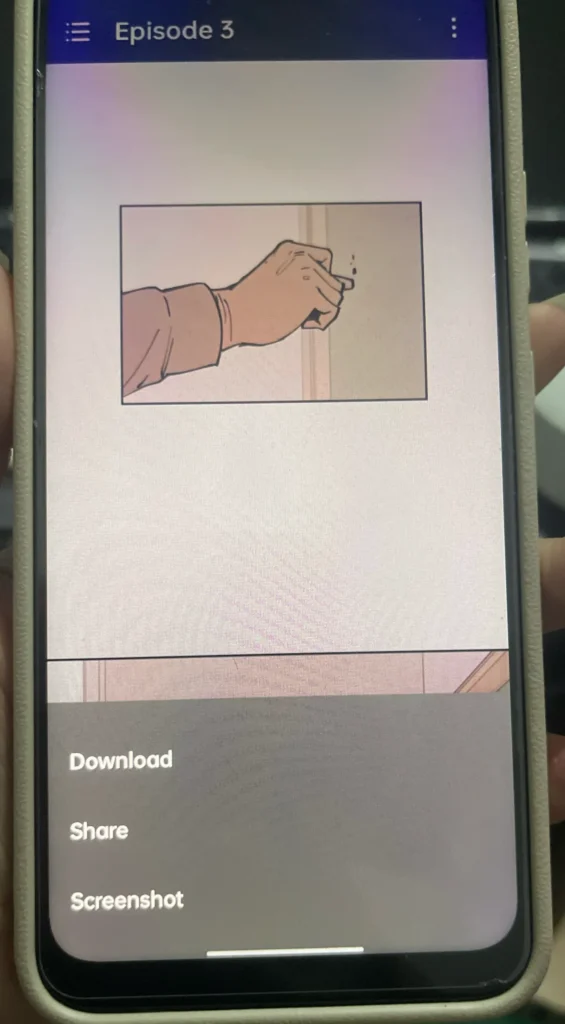
Can Capturing and Sharing Webtoon Screenshots Get You Sued or Account-Banned?
Saving a screenshot privately and publishing it to thousands of people are different activities. The legal and platform risks increase when an image is distributed publicly, monetized, altered, or used as a substitute for the original episode.
A short screenshot used inside a genuine review may have a stronger fair-use argument than a sequence of panels uploaded mainly for entertainment. Even then, the result is not guaranteed. Webtoons are highly creative works, and copying the most important image from a chapter may weigh against fair use even when the number of panels is small.
Crediting the title and artist is good practice, but attribution alone does not create permission. A post can identify the copyright owner accurately and still infringe copyright.
Platform enforcement is also separate from a court decision. A social network may remove an upload after receiving a copyright notice, while a reading service may restrict an account for violating its own terms. Under the US DMCA notice-and-takedown system, qualifying online services can remove or disable access to content after receiving a compliant infringement notice.
The practical answer is therefore:
Limited use connected to real commentary may be defensible, depending on the law and circumstances.
Uploading complete episodes, long consecutive sequences, or paid advance chapters creates a much higher infringement risk.
No responsible source can promise that sharing one, two, or three panels is always legal.
Why Do Webtoon Apps Display Security Warnings or Black Screens When You Take Screenshots?
A blank screenshot can result from a platform’s content-protection policy or an operating-system security feature. On Android, an app can apply FLAG_SECURE, which instructs the system not to permit screenshots and not to display the protected window on non-secure displays.
This is not necessarily full digital rights management in the same sense as encrypted video streaming. It is a screen-capture restriction applied to a protected window.
Protecting Licensed and Paid Content: A platform may use capture restrictions to make casual redistribution of purchased or early-access episodes more difficult.
Reducing Screen Recording: The same protection may prevent ordinary screen-recording tools from capturing a protected viewer.
Protecting Other Sensitive Screens: Applications can use similar controls for login pages, payment information, private messages, or account details. A black screenshot does not prove that the episode itself uses one particular DRM system.
Screenshot blocking does not directly stop ordinary web crawlers from copying pages. Automated copying is more commonly addressed through access controls, authentication, rate limits, encrypted delivery, watermarking, monitoring, and enforcement against unauthorized distribution.
WEBTOON’s terms state that its digital content is owned by the company or licensed from copyright owners. Users receive a limited, personal, noncommercial licence and generally may not copy, redistribute, modify, or bypass associated copy-protection technology unless the company states otherwise.
What Constitutes Copyright Infringement and Source-Hiding When Sharing Webtoon Images?
The status of an upload cannot be determined from one action alone. The surrounding purpose, amount, presentation, permissions, and jurisdiction matter.
| Sharing Behavior | Copyright Status | Impact on Creators & Publishers |
|---|---|---|
| Cropping out Watermarks / Logos | Not automatically a separate copyright violation in every case, but it can remove attribution or copyright-management information and weaken source identification | Makes it harder for readers to locate the title, creator, and authorized platform |
| Cropping 1 Single Panel with Credit | May qualify for an exception when genuinely needed for criticism or commentary, but is not automatically legal | Can provide context for a review, although credit does not replace permission |
| Posting an Entire Chapter | High infringement risk unless permission, a licence, or a narrow legal exception applies | Allows readers to consume substantial content without visiting the authorized release |
| Posting Consecutive Key Panels | Can reproduce the narrative substance of an episode even without every panel | May substitute for the chapter or reveal paid and unreleased material |
| Using Images to Promote Pirate Links | Strong evidence that the post supports unauthorized distribution | Redirects audiences away from licensed services and may expose them to deceptive sites |
The DMCA also addresses the intentional removal or alteration of copyright-management information in certain circumstances. Such information may include the title, author, copyright owner, and terms associated with use of the work. Not every crop triggers this rule, but removing identifying information should not be treated as harmless by default.
Who Owns Image Rights?
Paying to unlock an episode does not usually transfer copyright ownership to the reader.
The payment normally purchases limited access under the platform’s terms. It may allow the episode to be viewed through the account or temporarily downloaded inside the application, but it does not grant a general right to reproduce, publish, translate, sell, or distribute the artwork.
WEBTOON expressly describes its digital content as licensed rather than sold and limits ordinary use to personal, noncommercial access. Its help center also states that downloaded Originals remain available on the device for a limited period and are subject to copyright restrictions.
Ownership can vary by production arrangement. Rights may belong to an individual creator, several creators, a studio, a publisher, or another company under contract. On self-publishing services, creators may retain their intellectual property while granting the platform permission to host and promote it. WEBTOON says CANVAS creators retain ownership of their work, and Tapas likewise states that creators retain ownership while granting the service a publication licence.
Guide to Legally Sharing Webtoon Images Without Fear of Takedowns
No method can guarantee that a post will never receive a complaint. The following practices reduce risk and make the purpose of the use clearer.
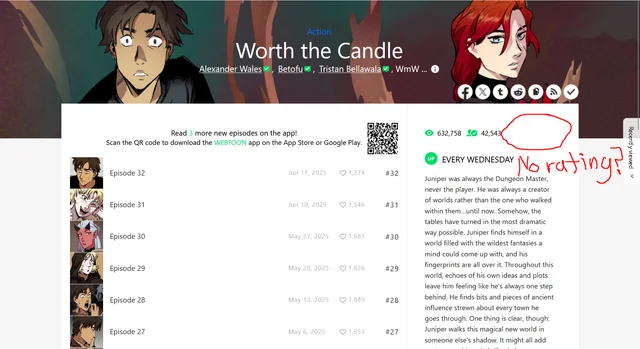
3 DOs:
Always Credit Source Information: Include the official title, writer, artist, studio or publisher where relevant, and the licensed platform. Do not guess at creator credits from an unauthorized repost.
Use Only What the Commentary Requires: Select the smallest portion needed to explain the point being discussed. Add meaningful analysis rather than using a panel as decoration or as the main attraction.
Include the Current Official Link: Link to the authorized series or episode when possible. If an older screenshot points to a listing that has been removed, [How to Find the New Page of a Webtoon That Has Moved to Another Serialization Platform] can help readers locate its current licensed page without directing them to a copied upload.
3 DON’Ts:
DO NOT Remove Identifying Marks Without a Reason: Keep the title, logo, watermark, or copyright notice when it does not expose private information or interfere with the commentary.
DO NOT Publish Paid or Advance Material Merely to Reveal It: Fast Pass, preview, rental, and advance episodes remain protected even after a reader pays for access.
DO NOT Reconstruct the Episode: Avoid long vertical captures, screen recordings, translated reposts, and consecutive panels that allow followers to read the story without visiting the original platform.
Spoiler etiquette and copyright are separate issues. A heavily blurred climax panel may avoid a spoiler but still reproduce copyrighted artwork. Conversely, describing the ending in original words may raise spoiler concerns without copying an image.
How to Use Official In-App Screenshot Features Built into Webtoon Apps
Readers should use the platform’s own share controls before attempting to capture the screen. A share control normally produces a link, preview card, or approved promotional element selected by the service.
It does not necessarily grant permission to extract any panel or repost the resulting material for commercial use. Review the text displayed by the app and the platform’s current terms.
Usage Across Popular Apps:
WEBTOON App:
WEBTOON’s current help center instructs mobile users to share a series through the Share icon on the episode list. An individual episode can be shared by opening the viewer menu and selecting Share. The documented feature shares the series or episode; it should not be described as a universal panel-capture tool unless that option is actually visible in the user’s current app version.
Kakao Webtoon App:
Features can differ by country, operating system, account status, and app release. Use only the sharing or clipping option shown in the current official application. Do not assume that every Kakao version generates a panel, watermark, or QR code.
Tapas and Other Platforms:
Use the platform’s series page, share button, creator-approved promotional images, or official social posts. Tapas prohibits copyright-infringing uploads and may remove content after receiving a valid complaint.
An official share button is generally the lowest-risk way to recommend a series because it sends readers to the licensed page without reproducing a substantial part of the work.
Taking and sharing Webtoon screenshots is not inherently a copyright violation, but the way those images are captured, edited, and distributed determines whether they remain within acceptable legal and ethical boundaries. Understanding how DRM protection, Fair Use principles, and publisher policies work allows readers to enjoy and discuss their favorite series without unintentionally harming creators or violating platform rules. Whenever possible, use the official sharing tools built into Webtoon applications, provide proper credit, limit screenshots to a few representative panels, and include links to authorized reading platforms. These simple practices help protect artists’ intellectual property while encouraging more readers to discover the original work through legitimate channels. By sharing responsibly, you not only reduce the risk of takedowns or account restrictions but also contribute to a healthier webtoon ecosystem where creators, publishers, and fans all benefit from sustainable and respectful content distribution.