A movie disappearing from Netflix, Prime Video, or another streaming platform does not automatically mean that its distributor has changed.
Streaming availability depends on licensing agreements, territory, and time period. Netflix, for example, states that licensed titles can leave when agreements expire and that renewal decisions consider whether rights remain available, regional popularity, and licensing cost.
A distributor change can affect where a movie is available, but the disappearance of one listing is not enough to prove that such a transfer occurred.
The more reliable approach is to identify the exact film, compare availability before and after the change, and inspect the new listing itself.
Movie Identification and Availability History
Start by fixing the identity of the movie before comparing streaming results.
Record the exact title, production year, production country, director, and, where useful, principal cast. This prevents confusion between remakes, extended editions, similarly titled movies, or different regional releases.
Then check a streaming-search service using the same country setting.
Services such as JustWatch allow users to search across legal streaming providers and filter by details including release year, country, runtime, and other title information.
Record:
- platform carrying the movie
- subscription, rental, or purchase status
- date it disappeared where known
- date a new listing appeared
- country used for the search
Netflix also displays a “Last day to watch on Netflix” notice when a title scheduled to leave is within the service’s notification window.
These dates provide a more useful timeline than assuming that a new distributor took over on the day the movie disappeared.
Single-Platform Removal and Wider Rights Changes
The number of services affected is an important clue.
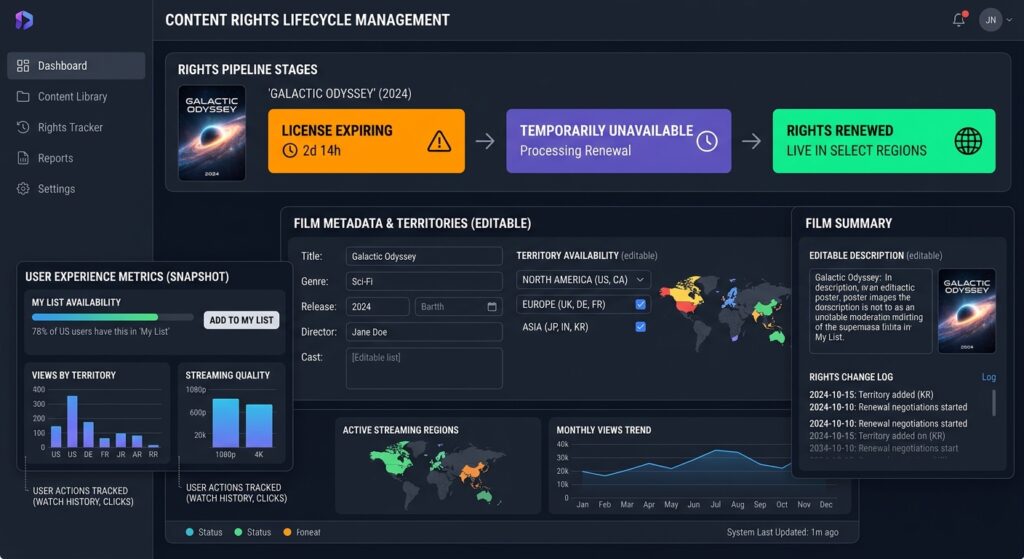
If a movie disappears from Netflix but remains available for rental on Prime Video, Apple TV Store, or another authorized service, the event may reflect the expiration of one particular license rather than a transfer of every distribution right.
Prime Video itself distinguishes titles included with a subscription from titles available separately for rental or purchase.
A broader change deserves more investigation.
If the same movie disappears from several subscription and transactional services around the same period and later returns through a different distributor or platform group, that pattern may be consistent with a wider rights change. It is still evidence to investigate rather than proof by itself.
Rights may be divided by country and type of exploitation. Netflix notes that another company can control a title’s rights in a particular region, which is one reason the same film may be available in one country and absent in another.
For that reason, compare results within the same country rather than mixing Korean, US, and European listings.
New Product Pages and Existing Viewing Rights
A returning movie may not always use exactly the same product page.
A platform can potentially receive a different delivery package, artwork set, rights period, localization package, or edition of the same film. From the viewer’s perspective, the title may consequently appear as another listing rather than a continuation of the previous page.
This matters for saved information.
A new listing may not necessarily inherit:
- wishlist or watchlist placement
- playback progress
- subtitle selections
- ratings or user preferences associated with the old listing
- purchase information displayed against a previous store entry
However, a new page alone does not prove that previous rights have disappeared.
Netflix, for example, says that a title that leaves can disappear from My List and reappear if it becomes available again in the member’s region.
Transactional purchases require an additional check. Prime Video supports purchases separately from subscription availability, while Apple likewise provides rental and purchase access through the Apple TV ecosystem.
If you previously purchased the movie and a new product page appears, open the service’s Purchases/Library section rather than assuming the new public listing determines your existing entitlement.
If playback no longer works, contact the store and provide the original purchase record.
Master Version and Localization Differences
A movie returning under the same title may not be technically identical to the previous version.
Compare the old and new listing using several fields:
Running time: A difference can indicate another cut, censorship edit, extended edition, or different opening and closing credits.
Aspect ratio: A new master can use a different presentation or restoration.
Subtitles and dubbing: Languages may change when the localization package or regional distributor changes.
Age rating: The classification displayed in the new territory or for another version may differ.
Credits: Distributor, localization company, copyright notices, or studio credits may reveal a changed delivery source.
These differences should be considered together.
A one-minute runtime difference does not automatically establish that a different edit is being shown because credits, frame-rate conversion, or platform metadata can also affect reported duration.
Larger differences accompanied by changed scenes, aspect ratio, subtitle tracks, or credits provide stronger evidence that the service is carrying another master or edition.
The actual playback screen is therefore more useful than the title alone.
Subscription, Rental, and Purchase Changes
A title can also return under a different payment model without becoming a different movie.
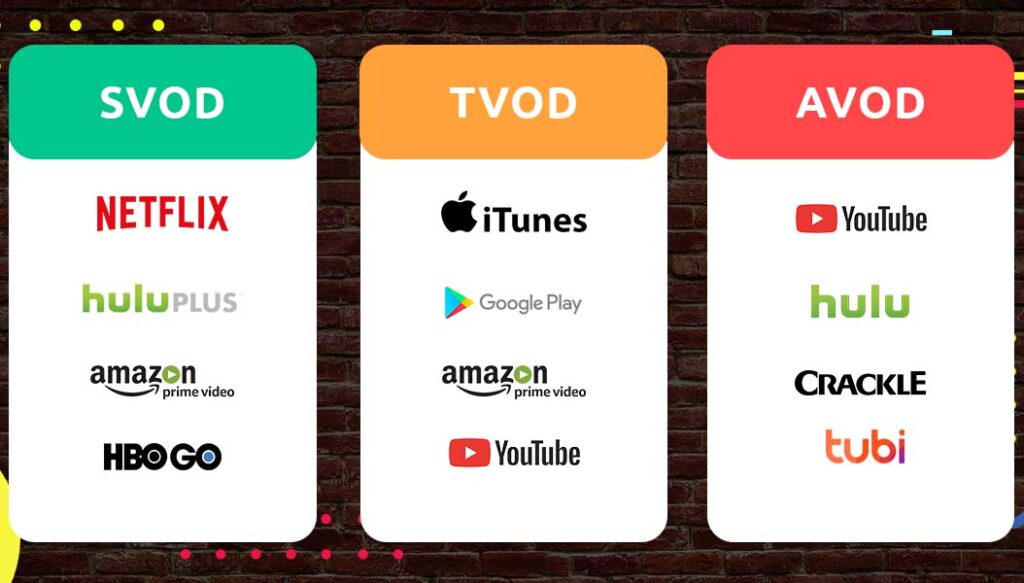
For example, it may disappear from a subscription catalog but remain available as a digital rental or purchase.
Prime Video explicitly operates both models: some content is included with Prime, while other movies can be rented or purchased separately.
The Apple TV app similarly supports movie rentals and purchases separately from the Apple TV subscription service.
Therefore:
SVOD removal → TVOD availability
does not by itself establish that distribution ownership was transferred.
It may simply mean that different rights are held under different agreements.
Record the availability type whenever comparing old and new listings so that a change in payment model is not mistaken for complete disappearance.
Search-Service Update Delays
Streaming search services are useful for discovering where a movie may be available, but they should not be the final playback check.
JustWatch describes itself as a guide that aggregates legal streaming offers from multiple services.
Its data and charts are updated regularly, but an aggregation service and the streaming provider itself are separate systems. For example, JustWatch states that its streaming-chart data is updated daily rather than continuously.
It is therefore possible for a search service and a platform page to temporarily show different information around a catalog change.
Treat an aggregator listing as a discovery signal.
For current availability, verify three sources:
streaming-search result → official OTT title page → actual Play/Rent/Buy button
If the aggregator says a title is available but the official page no longer permits playback in your country, the streaming service’s current page should take precedence.
The reverse can also occur shortly after a title returns.
Distributor Notices and Official Platform Evidence
A distributor change should ideally be confirmed through a source connected to the rights holder.
Look for announcements from:
- producer or studio
- old distributor
- new distributor
- streaming platform
- official film account
- local theatrical or digital distributor
A press release announcing an acquisition of streaming rights is much stronger evidence than noticing that the distributor credit on an aggregator changed.
Netflix itself explains that a missing title may result from unavailable rights, regional restrictions, profile maturity settings, VPN use, or the title not yet being released in that country.
Disappearance therefore has several possible explanations.
The most reliable conclusion combines the availability timeline with an official rights or release notice.
Current Availability Verification
The final check should be performed on the movie itself.
Confirm the exact title, year, and country. Compare its old and new availability history. Determine whether one service or several services removed it.
If the movie has returned, compare runtime, aspect ratio, audio, subtitles, rating, and credits.
Then open the official platform page and test whether the Play, Rent, Buy, or subscription button is actually available for your account and region.
The practical sequence is:
identify the exact film → compare previous and current platforms → distinguish a single-license expiration from a wider rights change → compare old and new product pages → verify existing purchases → inspect the new master → confirm playback directly on the OTT service.
A distributor change can explain why a movie moves between services, but disappearance alone does not prove one. The strongest answer comes from matching the film’s availability history with official rights information and the platform’s current playback status.